What a retreat actually is
A day — or a weekend — on the water with ten or twelve other people in recovery. Everything is provided. Everything is free. Most people arrive having never fly fished in their life.
The shape of a day
You arrive in the morning to a group of people you've probably never met, and it takes about ten minutes to work out that you don't have to explain yourself to any of them. That's usually the first thing people notice. There's coffee, there's introductions, and there's the particular ease of a room where everyone already knows the hardest thing about everyone else.
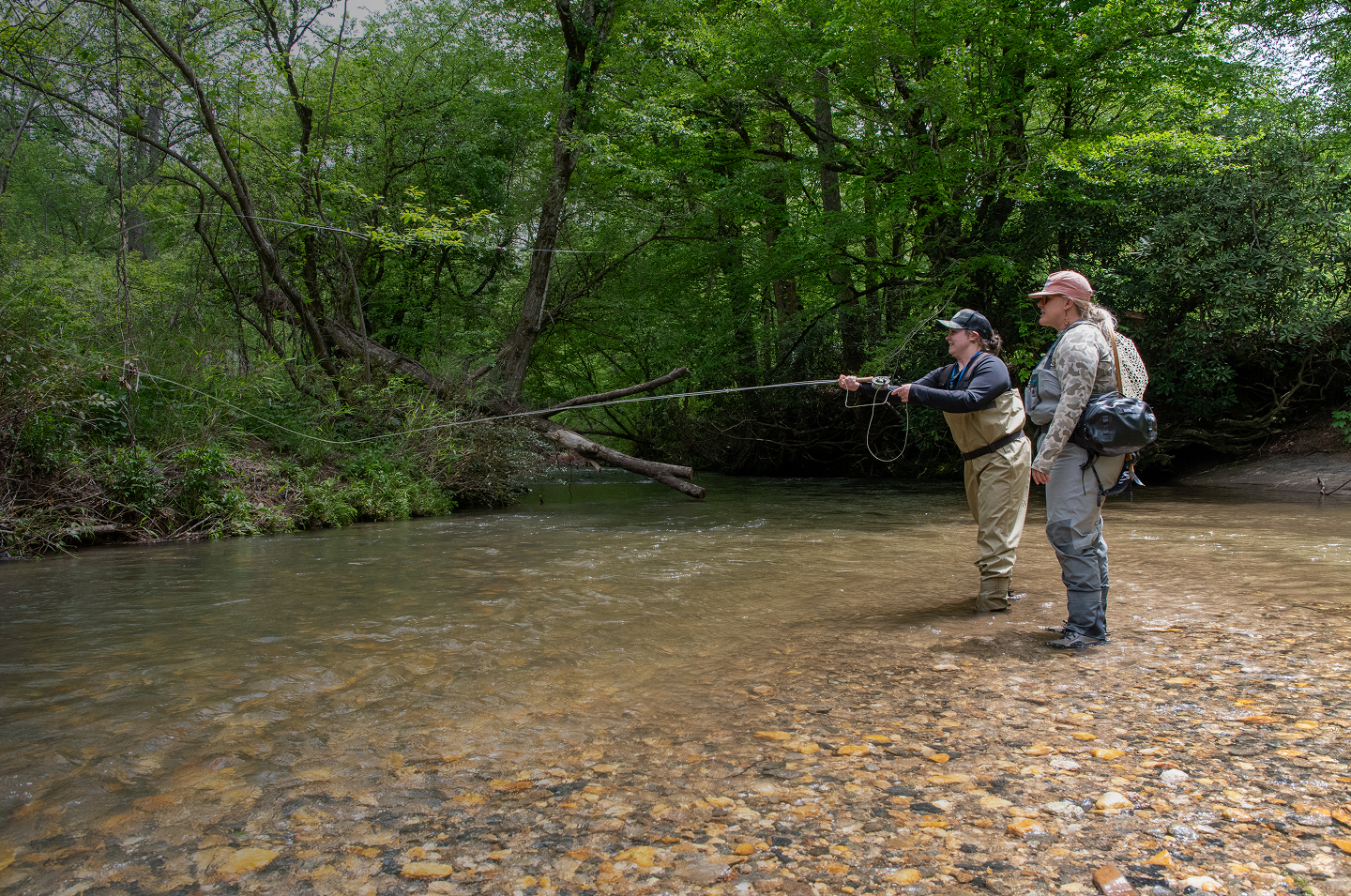
Then someone puts a rod in your hand. You're paired with a guide or a volunteer for the day, and they stay with you — not hovering, but there. They'll show you how to cast, talk you through what the water's doing, and tell you more about fly fishing than you strictly need to know. Most of them have been where you are.
Somewhere in the middle of that, you'll notice you've stopped thinking about anything else. That's the part that's hard to explain to people who haven't done it, and it's the reason any of this exists.
Some people catch fish. Some don't. Nobody minds either way.
“
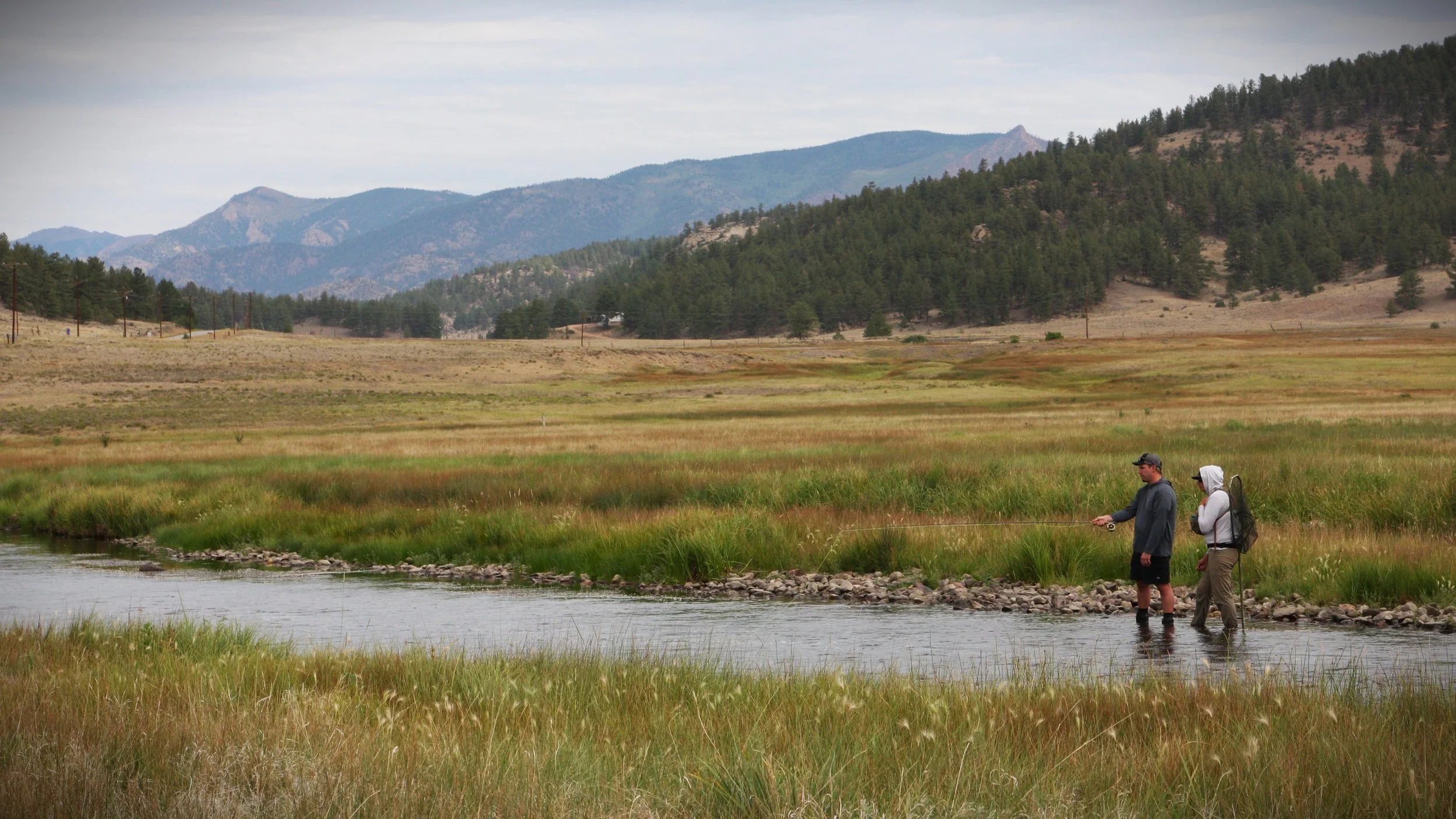
The time spent on the river, in Colorado's mountains, with people on a similar journey has been life changing. I have benefited so much from the conversations at the river, the stories told over lunch, and the friendships built by sharing our experience, strength, and hope in recovery. And we have even caught some beautiful fish."
Vince
Fly fishing guide

How a retreat runs
Times are typical rather than fixed. Locations vary and hosts adjust — the shape is what matters.
One day
How most of our retreats run.
8:00 am
Check-in and orientation
8:30 am
Open discussion meeting
9:30 am
Education — casting, knots, entomology
11:00 am
Lunch
11:30 am
Guided fishing
3:00 pm
Closing gathering
4:00 pm
Event ends
Three days, camping
Friday afternoon to Sunday afternoon.
Friday
Check-in and camp setup, orientation, dinner, and a gathering around the fire
Saturday morning
Meditation group on the therapeutic benefits of fly fishing, breakfast, then casting, knots and entomology
Saturday afternoon
Guided fishing with lunch on the river
Saturday evening
Dinner and an open discussion around the fire
Sunday
Meditation group, breakfast, a last morning of guided fishing, and a closing gathering at two
Retreats run rain or shine, barring genuinely dangerous weather or wading conditions. Groups are 10 to 12 participants, and every participant is paired one-to-one with a River Helper on the water.
What you need to know
What we provide
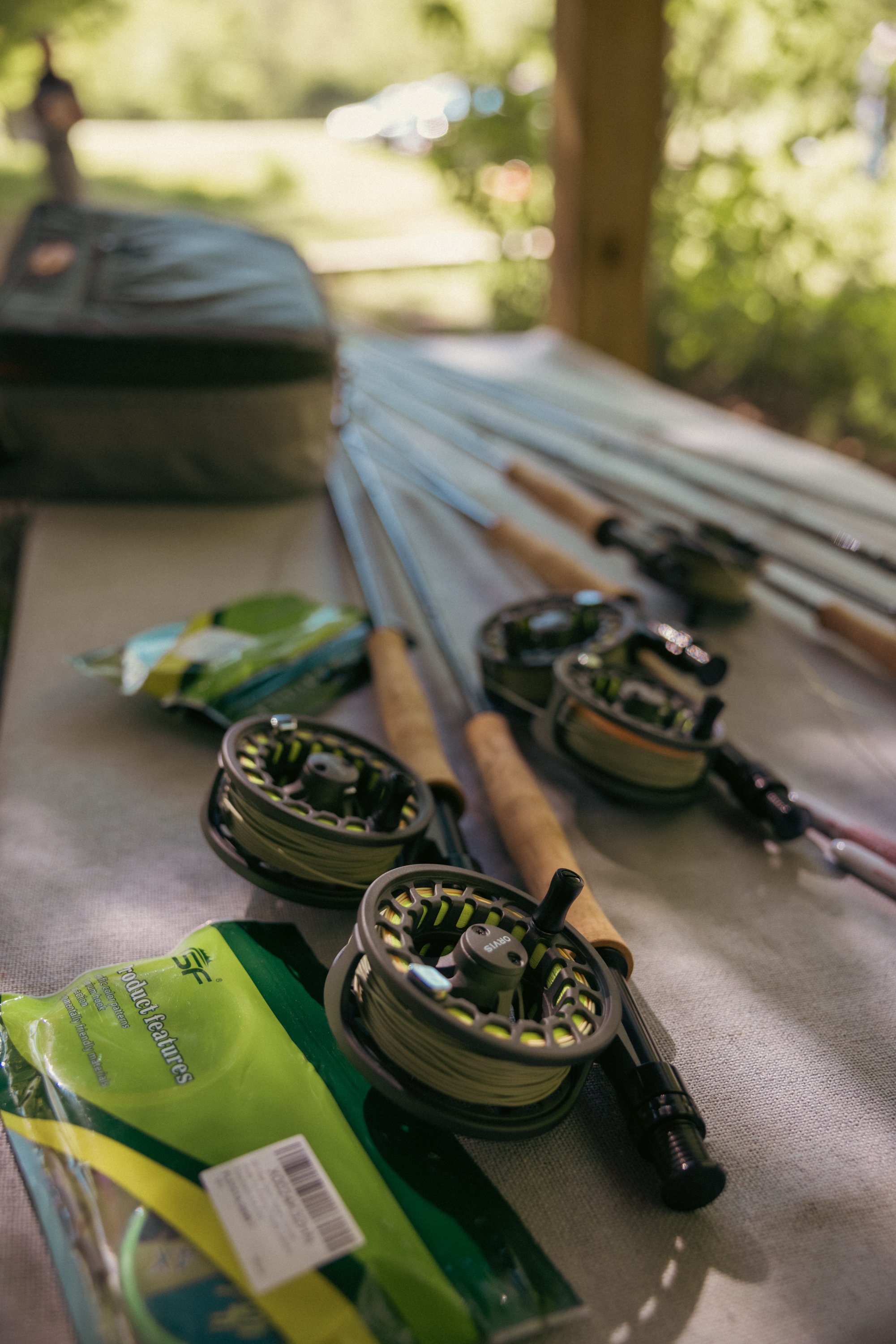
Day retreats. Rods and reels, leaders and tippet, waders and boots pre-sized to you, spare wool socks, a fly selection for the region, a boxed lunch, snacks, coffee and water, all instruction, a River Helper for the afternoon, a participant handbook and a goody bag. Your fishing license where one is required.
Camping retreats. Everything above, plus all food and drink for the weekend, a tent, an air mattress and a sleeping bag. Genuinely everything.
Getting there
Travel to a retreat is up to you — we don't book or cover flights, fuel or the drive. Everything from the moment you arrive is on us, and on camping retreats that includes where you sleep.
What to bring
Day retreats. Layers, wool or moisture-wicking socks, polarized sunglasses, a hat, sunscreen, and a change of clothes and a towel.
Camping retreats. Clothes, a rain jacket, a pillow and polarized sunglasses. That is the whole list.
Bring the change of clothes. As our own manual puts it, it is not a matter of if you fall in, it is when.
The waiver
You'll sign a liability waiver when you check in, and nobody enters the water without one on file. It includes a photo release you can decline — if you do, our hosts are instructed not to photograph you. No explanation needed.
Who comes on a retreat
You need to be eighteen or older with thirty consecutive days of sobriety behind you. That's it. No cost, no experience, and nothing to own.
There's no mobility or medical requirement. If you have accessibility needs, tell us when you register and we'll plan around them.
Under thirty days, or coming through a treatment center? We run retreats in partnership with recovery centers whose staff attend alongside their people, which opens the door earlier. If that's your situation, or you work at a facility that wants to bring a group, get in touch.
Questions people ask
-
No. Most people who come have never held a fly rod. That's the normal starting point.
-
Nothing. Every retreat is free to every participant. No fee, no deposit, nothing to buy.
-
No. Rods, reels, waders, boots and flies are all provided, and your waders and boots are sized to you ahead of time. Bring layers, polarized sunglasses and a change of clothes — that's the whole list.
-
Day retreats run from around eight in the morning to four in the afternoon. Camping retreats start Friday afternoon and finish Sunday afternoon. Times shift by location, so treat those as the shape rather than the schedule.
-
Thirty consecutive days, and you need to be eighteen or older. If you're coming through a treatment center whose staff will attend with you, that's different — get in touch.
-
Yes. Our retreats are wade fishing, not boats, and you're paired one-to-one with a River Helper the whole time. Wading staffs are available, and nobody goes anywhere they're not comfortable.
-
We fish rain or shine. The only things that stop us are genuinely dangerous weather or wading conditions.
-
Only if you're happy to be. The waiver includes a photo release you can decline, and our hosts are told who has.
-
Yes — travel to the retreat is on you. Everything from arrival onward is covered, including lodging on camping retreats.
-
You'll get a confirmation email straight away. Closer to the date, the retreat host will be in touch with a meeting point, a time, and anything specific to that location. If anything changes on your end, just reply to that email